Article by Adam Willson and Bita Takrimi
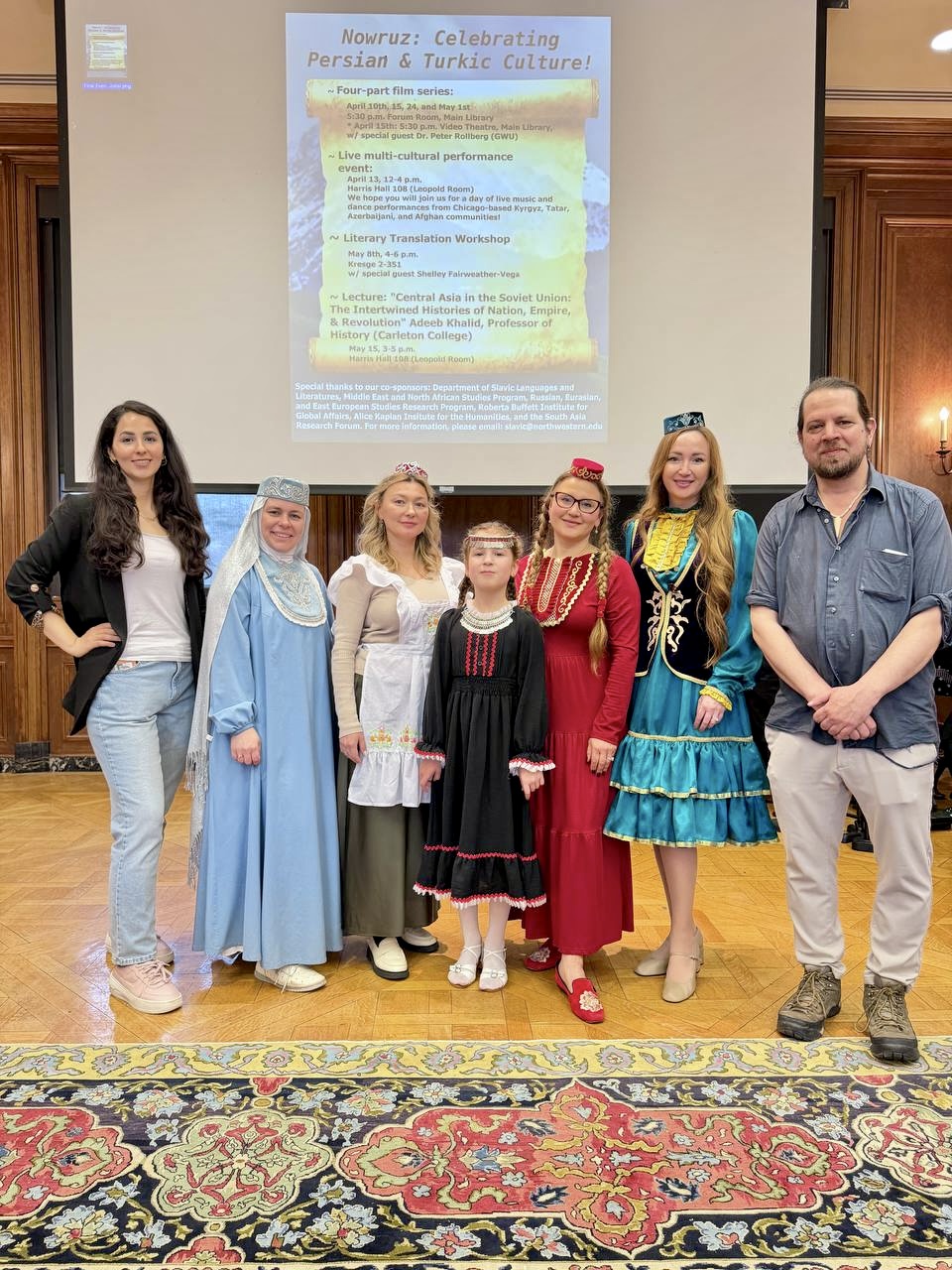
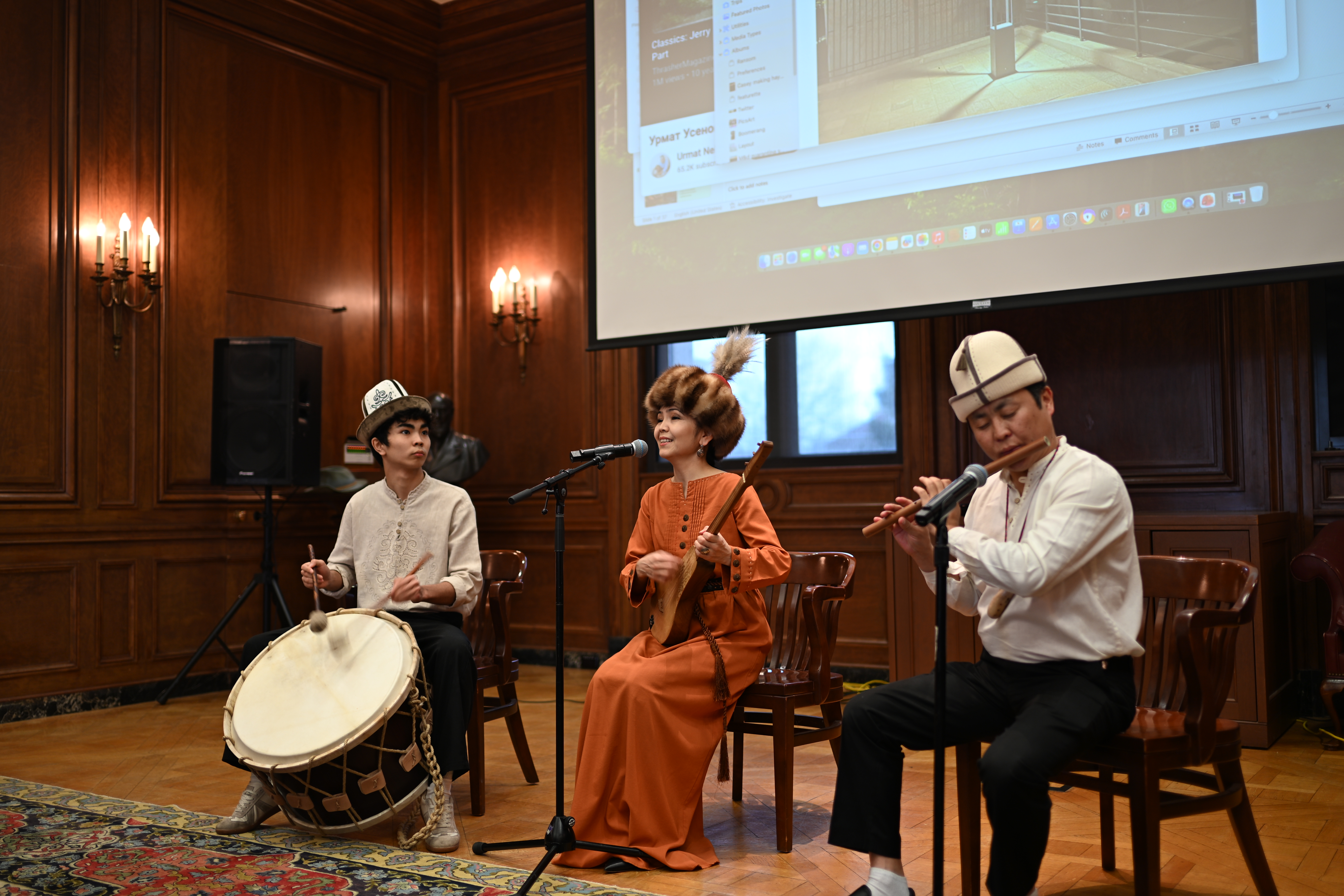
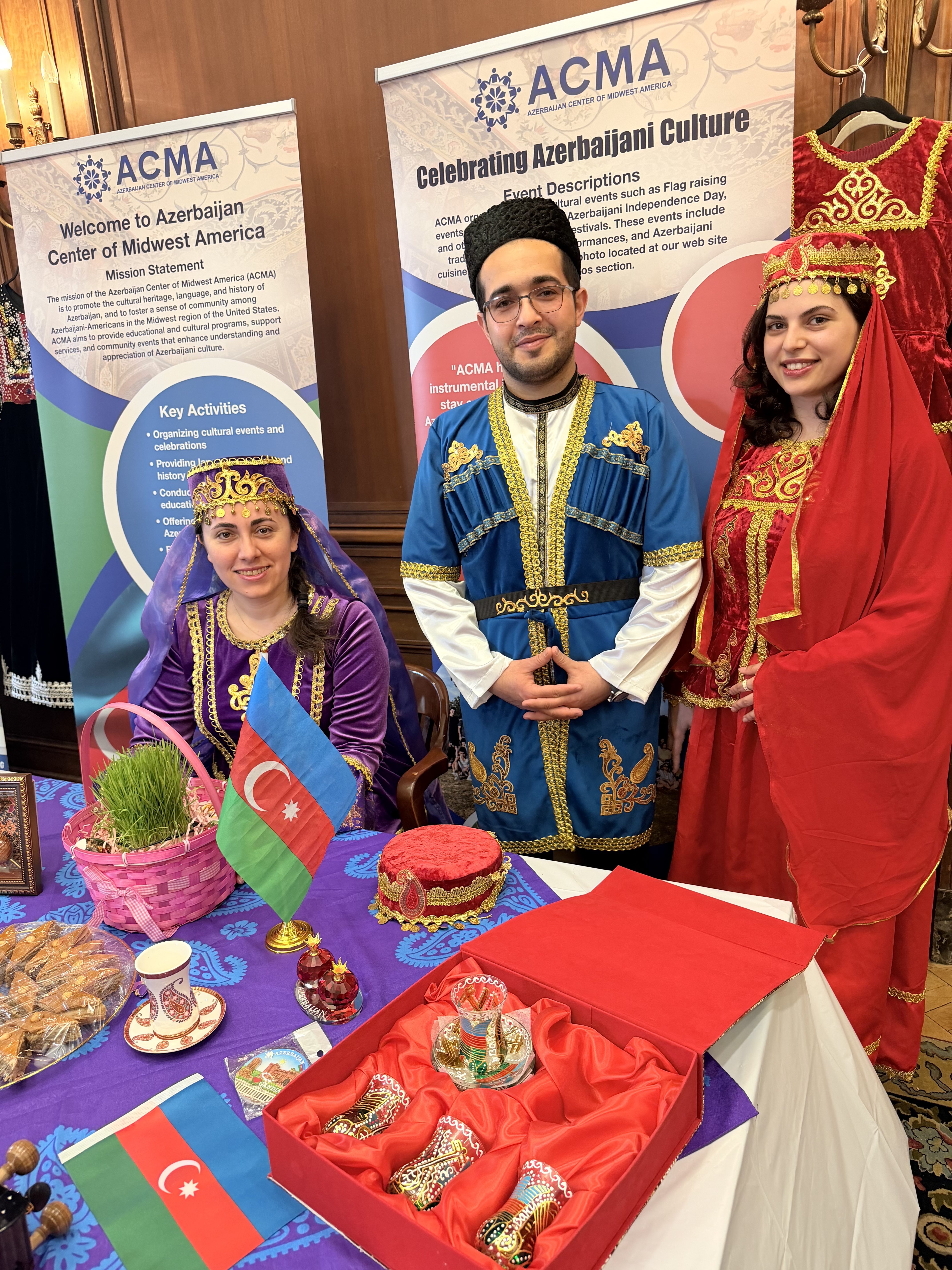
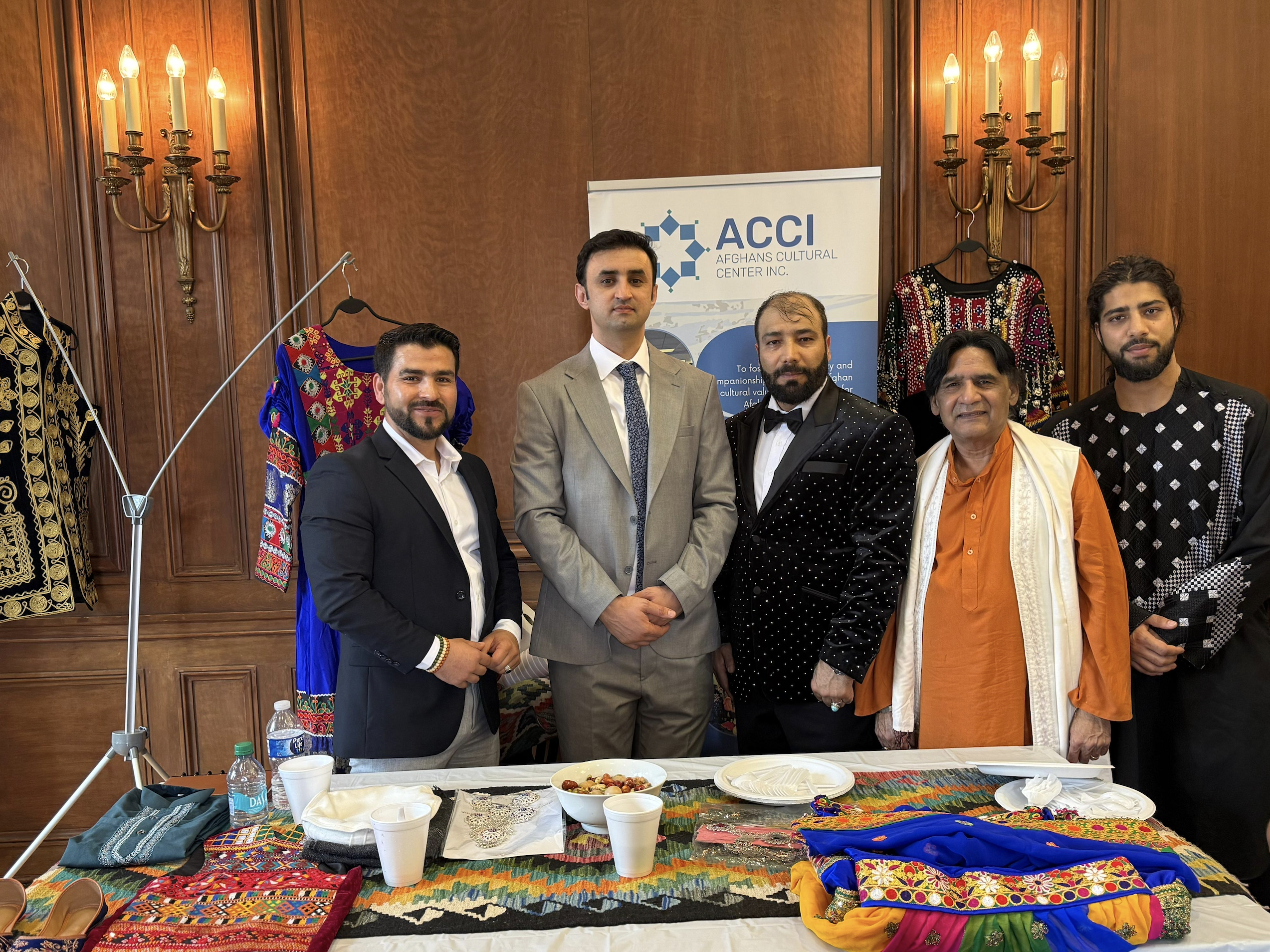
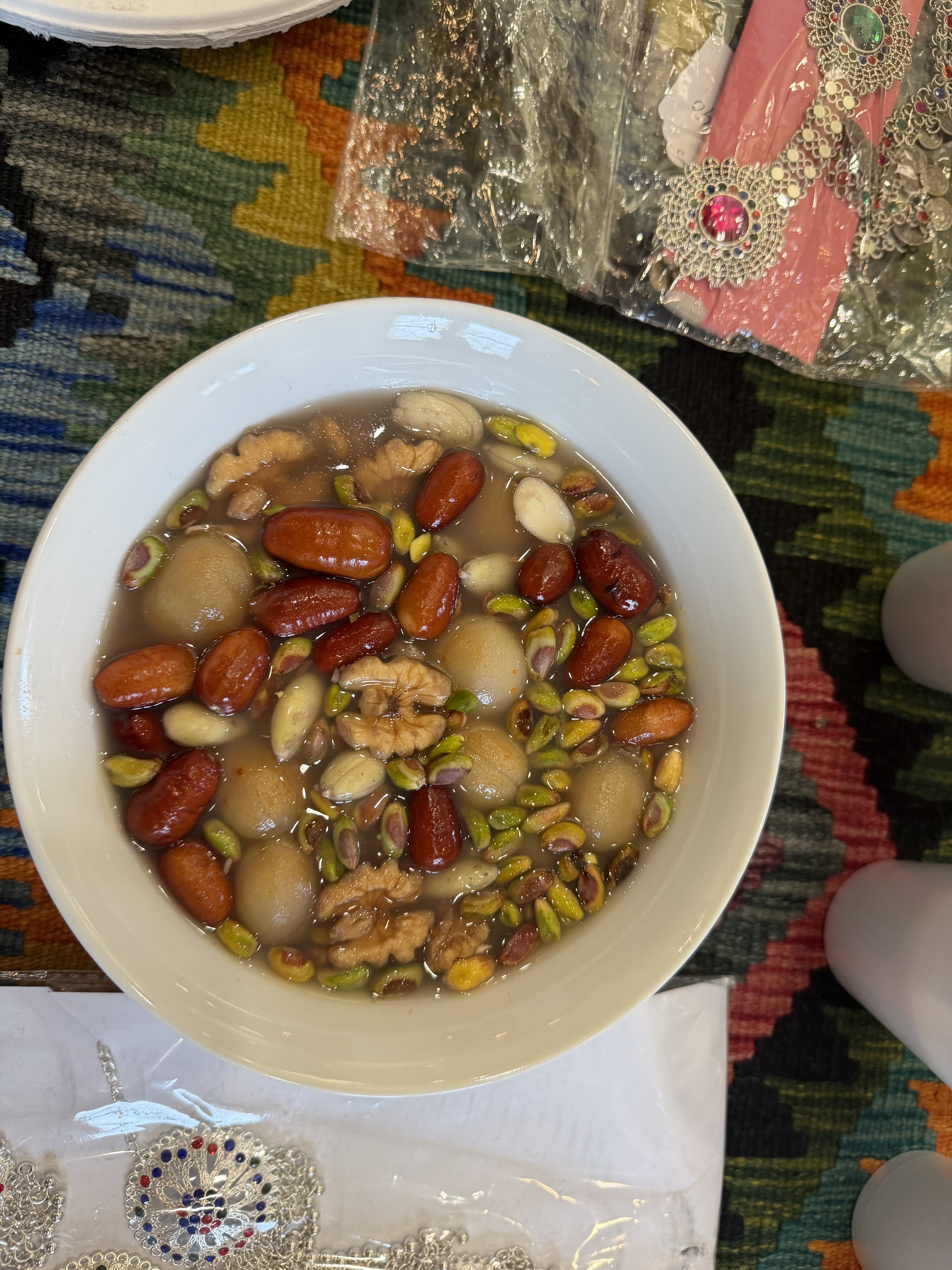
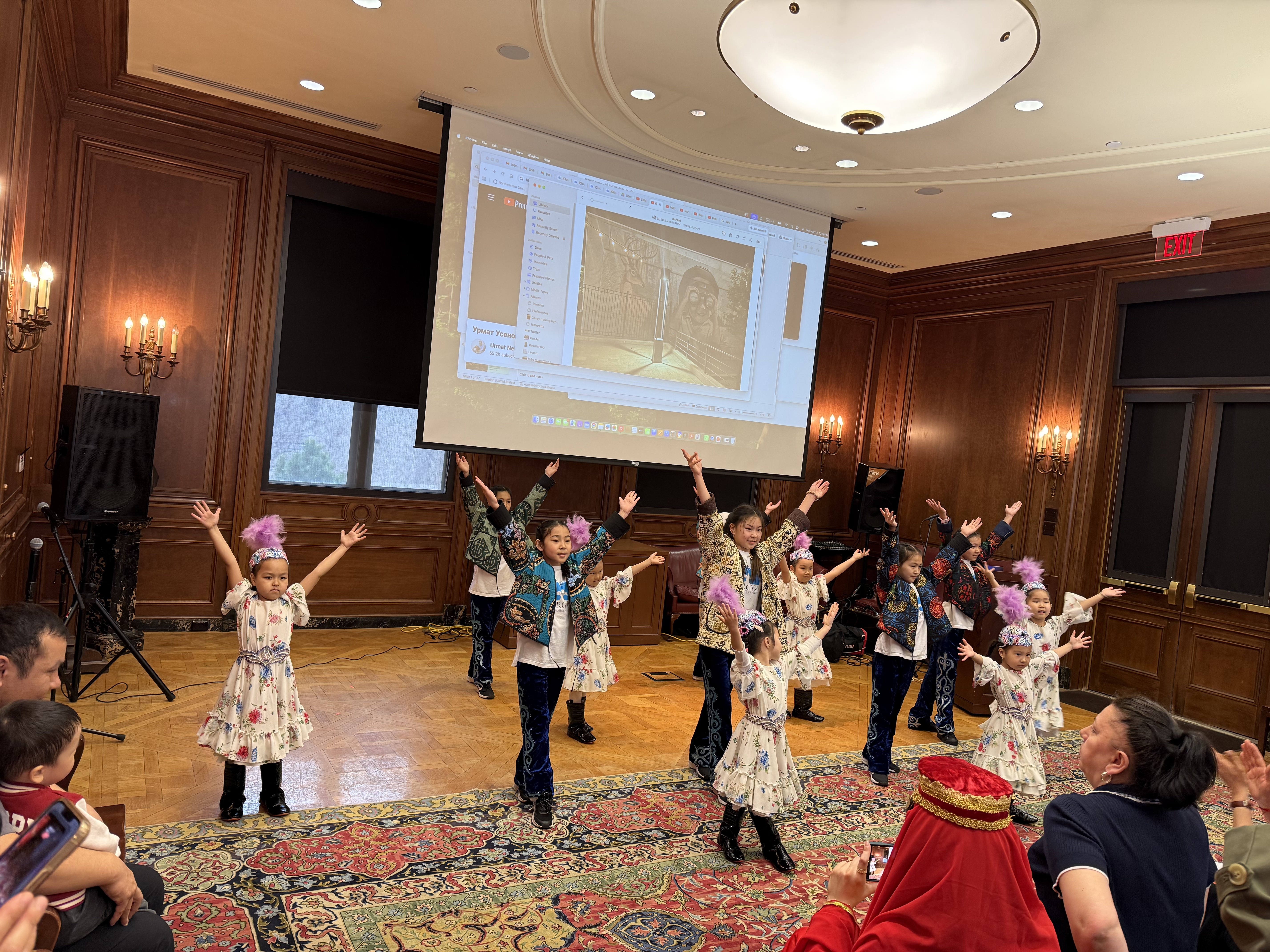
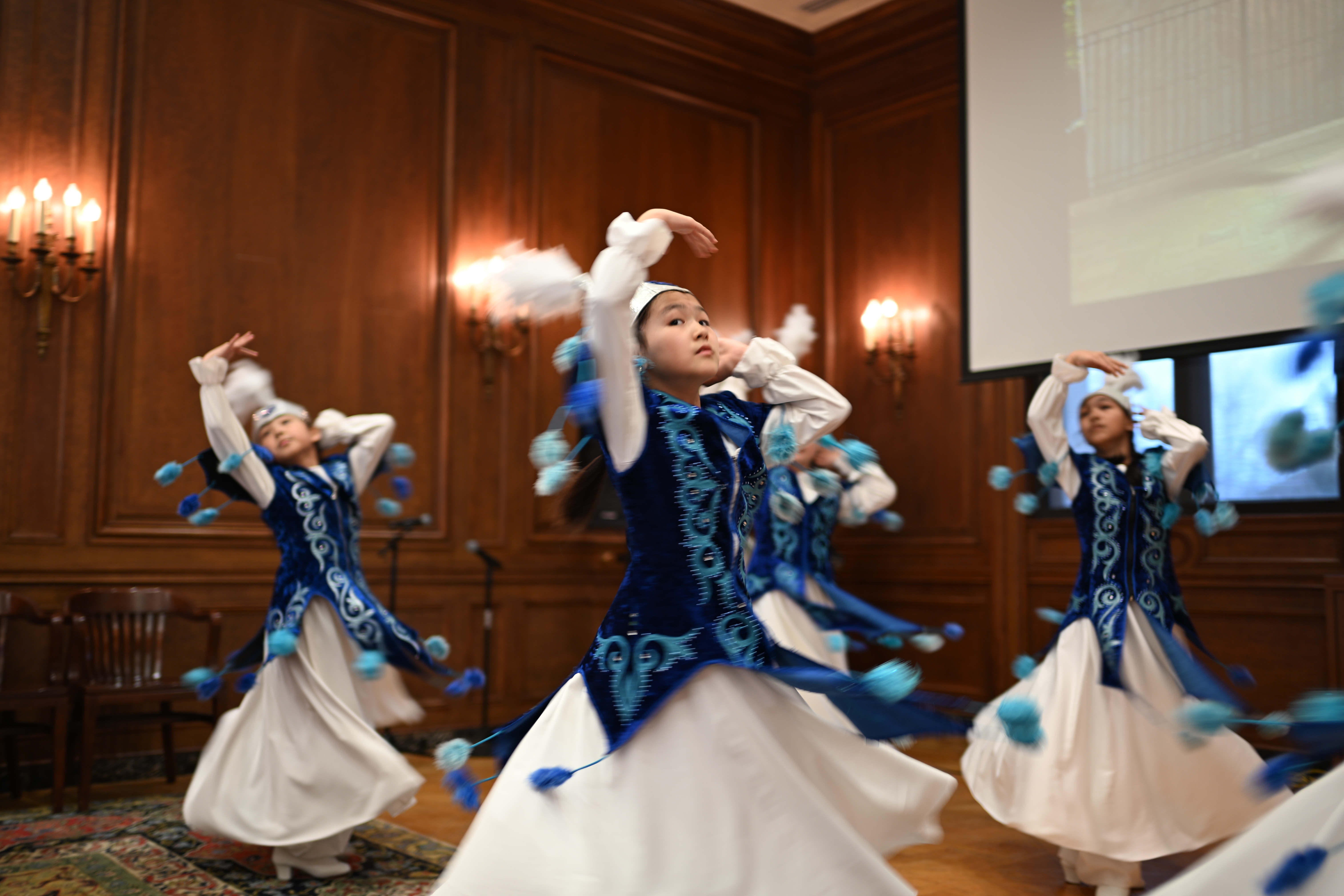
On April 13th the Slavic Department organized a live multicultural performance event that brought together students, scholars, and members of Chicago’s diverse diaspora communities in a vibrant celebration of the Persian and Turkic New Year, called Nowruz. Hosted in Harris Hall, the event featured live music and dance performances, cultural booths, and traditional foods associated with the holiday and theme of rebirth.
The event highlighted the richness and diversity of Nowruz traditions through participation from Azerbaijani, Kyrgyz, Afghan, and Tatar communities. Performances showcased traditional costumes, instruments, and dances, while attendees engaged with cultural displays and shared experiences across communities. By bringing together multiple cultural groups, the celebration emphasized inclusivity and cross-cultural dialogue, reinforcing Nowruz as a shared heritage that transcends national boundaries and fosters a sense of unity, renewal, and collective joy.
This year, in addition to the live performance event, graduate student organizers Adam Laten Willson and Bita Takrimi planned a four-part film series, focusing on Persian and Turkic films which address the modern search for identity in the traditional past, a literary translation workshop with prominent Central Asian translator Shelley Fairweather-Vega, and a lecture by esteemed historian Dr. Adeeb Khalid, who will present on the themes of empire, nation-building and revolution in Soviet Central Asia.
This event series was inaugurated in the Spring of 2024 by Willson in partnership with Art History Visiting Professor Adri Kácsor. As part of its first-year programming, the Kyrgyz Community of Arlington Heights was invited to build a yurt and perform live music and dance in Main Library Plaza, while students, faculty, and staff were treated to Central Asian cuisine from local chain Jibek Jolu. Other components of the series were a film screening of Bulat Mansurov's 1963 Turkmen classic "The Contest" and an invited guest lecture from art historian Christianna Bonin, who presented on Mongolian socialist realism. Last year, the tradition continued with a live performance event from the Azerbaijani and Tajik communities and also included traditional food and egg-painting.
Nowruz (Persian spelling), the Persian and Central Asian New Year, is one of the most important traditional holidays among the Persian and Turkic cultures of Eurasia, dating back to Zoroastrian practice. It coincides with the spring equinox, representing renewal and bounty emphasizing themes of renewal, community, and cultural continuity. It is a time when bonds among family and friends are strengthened through feasts, dances, and music. While originating as a Persian holiday, it has been celebrated by Turkic and Persianic cultures across Central and South Asia for centuries. Thus it has become an important mode of international and intercultural exchange and global alliance.
Chicago is home to many of these cultural diasporas, featuring the largest Kyrgyz population in the Western Hemisphere and large communities of Kazakhs, Afghans, and other Turkic and Persianic peoples. Thus, the event series bears particular significance for Northwestern and the wider Chicago community.
Broadly, this event series aims to bring Persian and Central Asian art and culture to the forefront of Northwestern community discussions, as part of an ongoing effort to decolonize and de-Orientalize established histories of Eurasian peoples. The series directs focus to how 21st century localized perspectives and continuous traditions can help decenter and refresh canonic histories of Eurasian art, culture, and literature. Additionally, the series is designed as part of a continuous project of facilitating contact and dialogue between Northwestern students, faculty, and staff and the Eurasian diaspora in Chicago.
In addition to the Slavic Department's support, the organizers would like to express deep gratitude to our co-sponsors for making this series possible: The Middle Eastern and North African Studies Program (MENA Studies), the Russian, Eurasian, and East European Studies Research Program (REEES), the Roberta Buffett Center for Global Affairs, the Alice Kaplan Institute for the Humanities, and the South Asian Research Forum.